
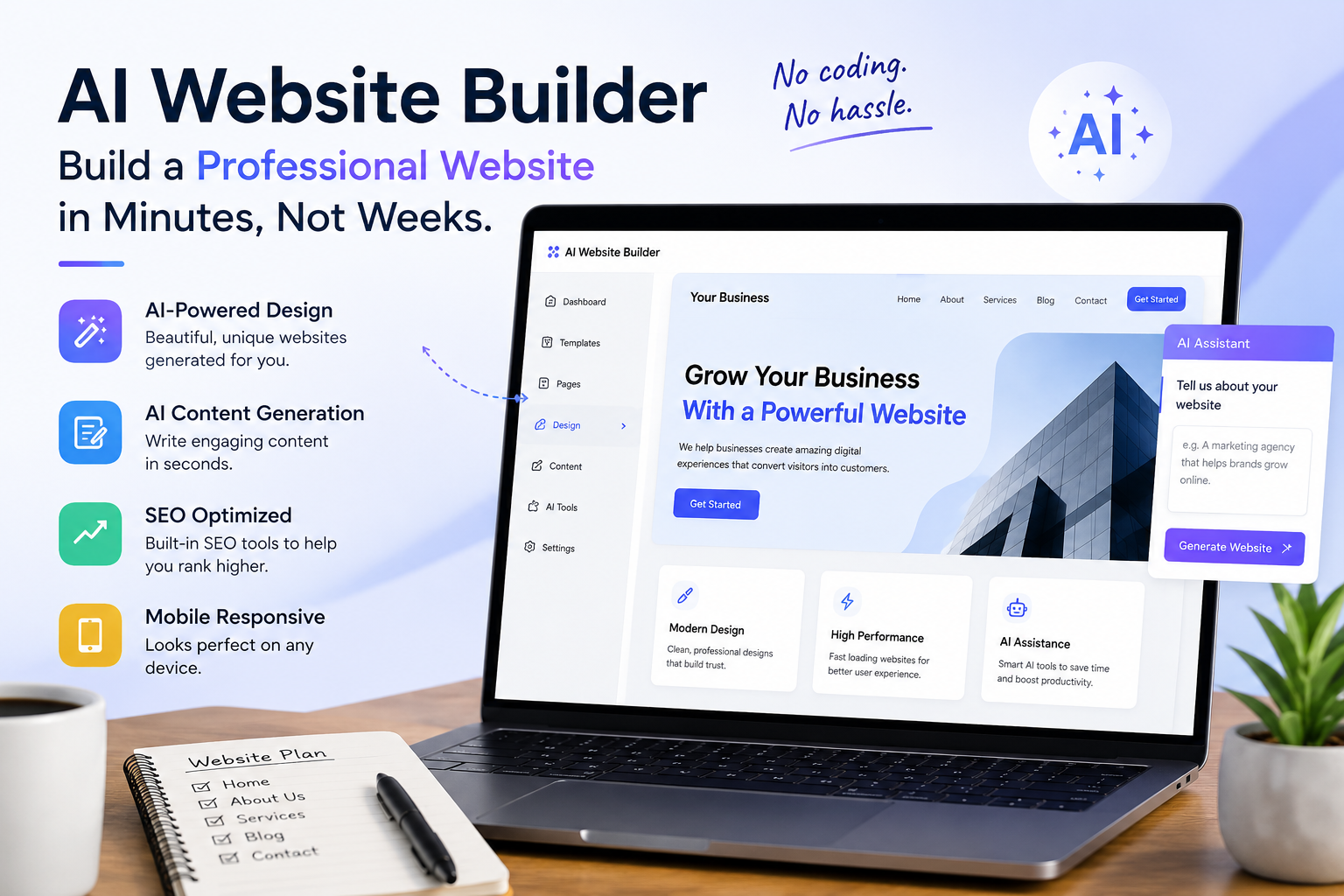
Most people would rather spend their time talking to customers, improving their products, or figuring out how to grow revenue. A website is important, of course, but for many small businesses it’s just one more task on an already crowded list. An AI website builder helps businesses to create their own websites.
That’s probably why the AI website builder category has taken off so quickly. It promises something people genuinely want: a way to get online without turning website creation into a part-time job.
And honestly, that appeal makes sense. As in general a growth-focused digital marketing agency, the best websites aren’t necessarily the most complex—they’re the ones that go live, attract customers, and support long-term business goals.
A friend of mine runs a small fitness coaching business. And for months, she kept saying she needed a website. Every weekend she’d sit down to work on it and end up overwhelmed by templates, design settings, and endless decisions about fonts and layouts. Eventually, she tried an AI-powered tool. Within a few hours, she had something live. Was it perfect? Not really. Did it help her start getting inquiries? Absolutely.
That seems to be the real value here.
The Appeal of an AI Website Creator
Most people don’t struggle with the idea of having a website. They struggle with the process of creating one.
The blank page is usually the problem.
When you open a traditional website builder, you’re often greeted with dozens of templates and hundreds of customization options. Some people love that level of control. Others stare at the screen and immediately wonder if they’ve made the wrong choice.
An AI website creator approaches things differently. Instead of asking users to make every decision upfront, it generates a starting point.
That may sound like a small difference, but it changes the entire experience.
It’s easier to improve something that already exists than to build everything from scratch. Writers know this. Designers know this. Website owners are discovering it too.
The Strange Thing About Building Websites
Here’s something I’ve noticed.
People often think website creation is about technical skills. In reality, it’s usually about decision-making.
Should the homepage look professional or friendly?
Should services appear above customer testimonials?
What should the headline say?
How many pages are actually necessary?
Those questions tend to slow people down more than technology ever does.
A good AI site builder removes some of that friction. It makes recommendations and gives users a direction to follow. You can still change things later, but at least you’re moving forward instead of endlessly debating every detail.
Some business owners will appreciate that more than others. If you’re highly creative and enjoy designing things from scratch, AI might feel restrictive. If you’re someone who just wants a website that works, it’s often a relief.
Why Speed Matters More Than People Admit
There’s a tendency to focus on features when discussing website tools.
People compare templates. They compare integrations. They compare customization options.
Meanwhile, many businesses are sitting there without a website at all.
That’s why speed matters.
A local accountant doesn’t necessarily need the world’s most innovative homepage design. They need a website that customers can find. A photographer needs a portfolio that people can view. A restaurant needs a place where visitors can check opening hours.
Getting online today is often more valuable than planning the perfect website for six months.
An AI website generator helps businesses cross that finish line faster.
And sometimes that’s enough.
Not Everything AI Creates Is Amazing
It’s worth saying this because marketing pages don’t always mention it.
AI-generated websites aren’t magic.
Sometimes the content feels generic. Sometimes the suggested layouts look similar to dozens of other websites. Occasionally, you’ll read a generated headline and think, “Nobody would actually say that.”
That’s normal.
The best results usually happen when people treat AI as a starting point rather than a final product.
Think of it like hiring an assistant who prepares the first draft. The groundwork is done, but a human still needs to step in and add personality, adjust details, and make sure everything feels authentic.
Businesses that understand this tend to get much better results.
What Makes an AI-Powered Website Builder Useful
Interestingly, the biggest advantage isn’t always design.
For many users, it’s momentum.
Once a website exists—even an imperfect one—people become more motivated to improve it. They add better photos, rewrite sections, and update services and pricing.
Without that initial version, nothing happens.
An AI website builder gives people something tangible to work with. Instead of spending weeks planning, they’re making real improvements to a live website.
That’s a completely different mindset.
I’ve seen small businesses spend months discussing website ideas and accomplish very little. I’ve also seen businesses launch a simple site in a day and gradually turn it into something impressive.
The second group usually wins.
The Rise of the AI Business Builder
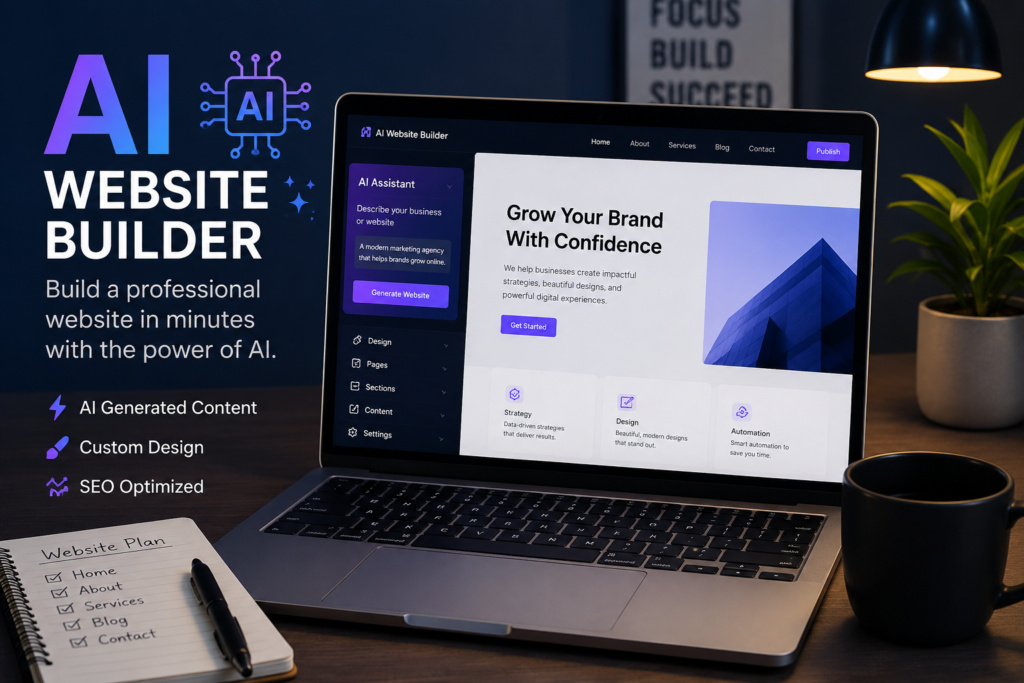
Website creation is only one piece of the puzzle now.
Many platforms are expanding into what some companies call an AI business builder. The goal isn’t simply creating pages. It’s helping businesses handle multiple online tasks from one place.
That might include email marketing, appointment scheduling, lead capture forms, analytics, or content generation.
Some business owners love having everything connected. Others prefer specialized tools for different tasks.
Personally, I think the answer depends on the stage of the business.
If you’re just getting started, simplicity is valuable. Managing five different platforms can become exhausting very quickly. Having one dashboard for everything feels practical.
As a business grows, the equation often changes.
Where Things Go From Here
The conversation around AI for website builder technology is changing.
A year or two ago, people mostly asked whether AI could build a website at all. Today, the question is different.
Can AI build a website that’s actually good?
In many cases, the answer is yes—at least good enough to launch, attract customers, and establish credibility online.
Will it replace experienced designers? Probably not.
There will always be businesses that need custom functionality, unique branding, or highly specialized user experiences. Human creativity still matters. Human judgment still matters.
What AI does well is remove unnecessary barriers.
It helps people move from idea to execution much faster than they could before.
And if we’re being honest, that’s where many businesses get stuck.
Final Thoughts
The popularity of the AI website builder isn’t really about artificial intelligence. It’s about convenience.
Most business owners aren’t searching for advanced technology. They’re searching for a simpler way to get things done.
AI happens to provide that.
Some websites generated by AI will look average. Some will need significant editing. A few will probably surprise you. That’s true of almost any tool.
What matters is that people who once felt intimidated by website creation now have a realistic path forward.
For a lot of small businesses, that’s more valuable than any flashy feature list. It’s the difference between planning a website and actually having one. And those are two very different things.
1 thought on “AI Website Builder: Why So Many Business Owners Are Giving It a Try”