A few years ago, keyword research was mostly a manual process.
You’d open a keyword tool, export hundreds of keywords into a spreadsheet, remove duplicates, group topics, analyze competitors, and then try to decide which opportunities were actually worth pursuing.
The process worked, but it wasn’t efficient.
Today, AI is changing that workflow completely.
Instead of spending hours collecting and organizing data, marketers can use AI to generate keyword ideas, identify search intent, build topic clusters, and uncover content opportunities much faster.
That doesn’t mean AI replaces keyword research.
In fact, one of the biggest mistakes I see is people relying entirely on AI-generated keyword suggestions without validating them.
The real advantage comes from combining AI with SEO expertise.
When used correctly, AI keyword research can help you find better opportunities, create stronger content strategies, and spend less time on repetitive tasks.
What Is AI Keyword Research?
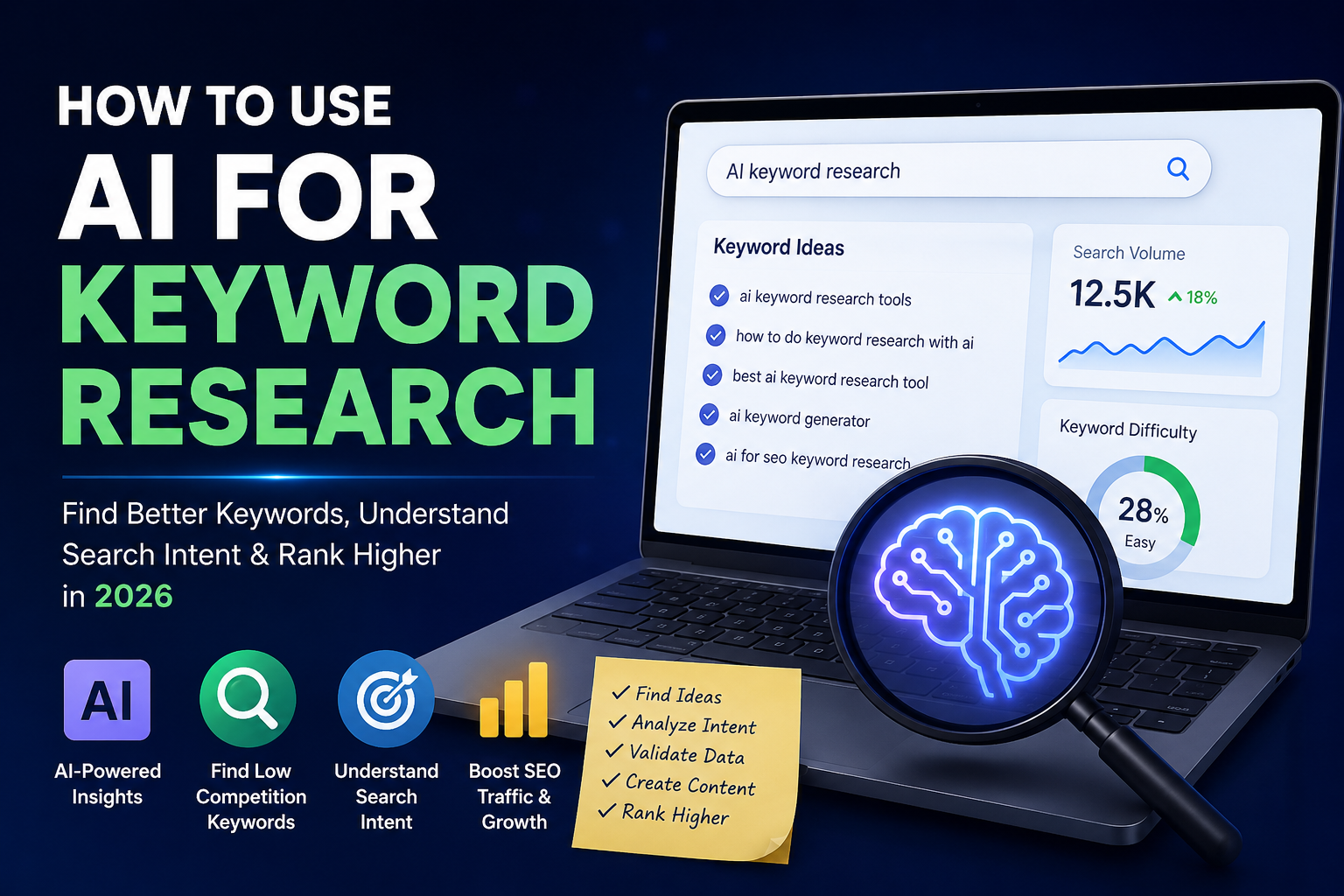
AI keyword research is the process of using artificial intelligence to discover, analyze, organize, and prioritize keywords for SEO and content marketing.
Instead of manually reviewing endless keyword lists, AI can quickly identify patterns, suggest related topics, group keywords by intent, and even help generate content ideas based on search behavior.
Think of it like having a research assistant.
The assistant can help collect information and organize it, but you still need to make strategic decisions.
That’s why the most successful marketers don’t use AI to replace keyword research.
They use it to improve keyword research.
AI can help with:
- Finding long-tail keyword opportunities
- Identifying related questions
- Understanding search intent
- Grouping keywords into clusters
- Discovering content gaps
- Generating blog ideas
- Analyzing competitors
The result is a faster and more efficient research process.
Why Traditional Keyword Research Is Becoming More Difficult
Keyword research isn’t harder because there are fewer opportunities.
It’s harder because there is more competition.
For almost every keyword you target today, you’re competing against businesses with dedicated SEO teams, content writers, AI tools, and years of established authority.
Simply finding a keyword with search volume is no longer enough.
You need to understand why people are searching, what type of content Google is rewarding, and whether your website realistically has a chance to compete.
I’ve seen businesses spend months targeting broad keywords that looked attractive on paper but generated very little traffic because they ignored search intent.
For example, a local service business may target a keyword with thousands of monthly searches, only to discover that searchers are looking for information rather than hiring a service provider.
This is where AI becomes useful.
Instead of manually analyzing hundreds of search terms, AI can identify patterns, categorize keywords, and help uncover opportunities that are often missed during manual research.
Benefits of Using AI for Keyword Research
AI Keyword Research Helps You Discover More Ideas Faster
One of the biggest advantages of AI is speed.
Traditional keyword research often starts with a handful of seed keywords.
AI can instantly expand those keywords into hundreds of related variations.
For example, let’s say your target keyword is:
AI keyword research
AI might generate:
- AI keyword research tools
- Best AI keyword research software
- Free AI keyword research tools
- AI SEO keyword generator
- AI keyword clustering tools
- AI-powered keyword analysis
- AI content research tools
Many of these opportunities might not appear in your initial brainstorming session.
AI Helps Uncover Search Intent
One lesson every SEO professional learns eventually is that search volume doesn’t tell the full story.
Two keywords can have the same search volume while attracting completely different audiences.
For example:
Keyword 1
What is AI keyword research?
This is informational intent.
The user wants to learn.
Keyword 2
Best AI keyword research tools
This is commercial intent.
The user is likely comparing software before making a purchase decision.
Understanding intent helps create content that matches what users actually want.
AI can help categorize keywords based on search intent, making content planning much easier.
AI Makes Topic Clustering Easier
Google increasingly rewards websites that demonstrate topical authority.
Instead of publishing isolated articles, successful websites create groups of related content.
This is known as topic clustering.
For example:
Main Topic
AI Keyword Research
Supporting Topics
- AI SEO Tools
- Keyword Clustering Tools
- Search Intent Analysis
- AI Content Planning
- AI Content Optimization
- AI Keyword Generator Tools
These articles support each other and help search engines understand your expertise on the subject.
AI tools are particularly useful for identifying these relationships.
AI Can Help Identify Content Gaps
One of my favorite uses of AI is content gap analysis.
Let’s say you’re researching competitors.
AI can quickly identify:
- Topics competitors cover
- Questions they answer
- Keywords they target
- Areas they may have missed
This creates opportunities to produce more comprehensive content.
Instead of copying competitors, you can build on what already exists and create something better.
For newer websites like Mixcale, this can be an excellent way to uncover opportunities that larger competitors have overlooked.
My Real-World AI Keyword Research Workflow
When most people hear about AI keyword research, they imagine typing a keyword into ChatGPT and publishing whatever comes back.
That’s not how successful SEO campaigns work.
My preferred workflow is much simpler.
First, I use AI to generate ideas, not make decisions.
For example, if I’m researching a topic like “AI SEO tools,” I’ll ask ChatGPT to generate related questions, long-tail keywords, common pain points, and content ideas.
Next, I validate those ideas using SEO tools such as Semrush or Ahrefs.
This is where I look at:
- Search volume
- Keyword difficulty
- Search intent
- Competitor strength
- Content opportunities
Finally, I organize keywords into clusters before creating content.
This process combines the speed of AI with the accuracy of real SEO data.
In my experience, this approach consistently produces better results than relying solely on AI or solely on traditional keyword research methods.
Example Workflow
Let’s say you’re creating content for a website about AI marketing.
Step 1
Enter a seed keyword:
“AI marketing”
Step 2
Use ChatGPT to generate:
- Related topics
- Questions
- Long-tail keywords
- Common challenges
Step 3
Validate opportunities in Semrush or Ahrefs.
Step 4
Group keywords into topic clusters.
Step 5
Create multiple related articles rather than targeting a single keyword.
This is one of the fastest ways to build topical authority in competitive industries.
Best AI Tools for Keyword Research
AI is only as effective as the tools you use.
Some tools are excellent for brainstorming. Others are better at validation, competitor analysis, or discovering search opportunities.
The mistake many beginners make is expecting a single tool to do everything.
In reality, the most effective SEO workflows combine multiple tools.
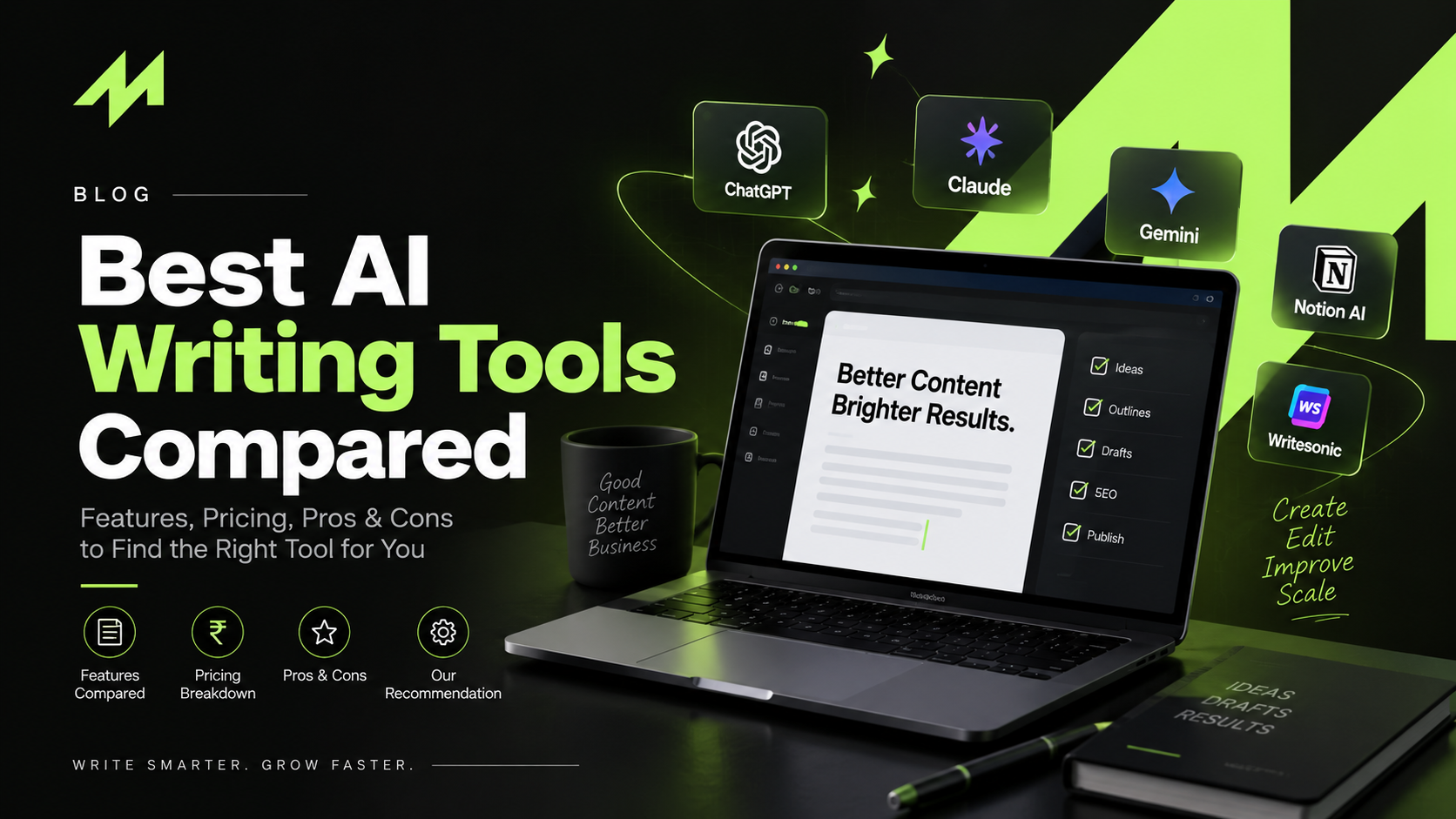
Let’s look at some of the best AI-powered tools for keyword research in 2026.
1. ChatGPT
Best for Keyword Ideation and Topic Discovery
ChatGPT is often the first tool marketers experiment with when exploring AI keyword research.
While it doesn’t provide search volume data, it’s surprisingly useful for brainstorming and topic discovery.
One use case I rely on frequently is content expansion.
For example, if my target keyword is:
AI keyword research
I can ask ChatGPT:
Generate 50 long-tail keyword ideas related to AI keyword research for beginner marketers.
Within seconds, it produces dozens of potential angles.
Some examples might include:
- AI keyword research for beginners
- How AI finds keyword opportunities
- AI keyword clustering tools
- AI keyword research workflow
- Best AI keyword tools for SEO
The important thing to remember is that ChatGPT should help generate ideas, not validate them.
Every keyword suggestion still needs to be checked using SEO tools such as Semrush, Ahrefs, or Google Keyword Planner.
Pros
✔ Fast idea generation
✔ Excellent for topic clustering
✔ Great for FAQ creation
✔ Affordable
Cons
✘ No search volume data
✘ Can generate inaccurate suggestions
✘ Requires validation
Best For
Content creators, bloggers, agencies, and marketers looking to speed up research.
2. Semrush
Best for Validating Keyword Opportunities
Once you’ve generated ideas, you need real data.
That’s where Semrush becomes valuable.
Many marketers think of Semrush as a keyword research platform, but it’s really a complete SEO ecosystem.
One thing I like about Semrush is its ability to help prioritize opportunities.
Instead of simply showing search volume, it helps answer questions like:
- Is this keyword realistic?
- How difficult is it to rank?
- What content is already performing well?
- Which competitors are ranking?
These insights can save significant time.
Practical Example
Let’s say ChatGPT suggests:
“Best AI keyword research tools”
Before creating content, I would check:
- Search volume
- Keyword difficulty
- Competitor strength
- SERP features
using Semrush.
That validation step prevents wasted effort.
Pros
✔ Comprehensive keyword data
✔ Competitor analysis
✔ Keyword gap tools
✔ Search intent insights
Cons
✘ Premium pricing
✘ Can feel overwhelming initially
Best For
Agencies, businesses, and serious SEO professionals.
3. Ahrefs
Best for Finding Untapped Opportunities
If Semrush is excellent for validation, Ahrefs is excellent for discovery.
One reason many SEO professionals love Ahrefs is its ability to reveal opportunities competitors are already benefiting from.
I’ve often used Ahrefs to answer questions like:
- What keywords are driving traffic to competitors?
- Which pages are earning backlinks?
- What content topics are working?
This often uncovers opportunities that keyword tools alone may miss.
Example
Imagine a competitor receives significant traffic from:
“AI content optimization tools”
That may inspire:
- Best AI Content Optimization Tools
- AI Content Optimization Guide
- AI SEO Content Workflow
One keyword can lead to an entire content cluster.
Pros
✔ Excellent backlink data
✔ Strong keyword explorer
✔ Great competitor insights
✔ Useful content gap reports
Cons
✘ Premium pricing
✘ Learning curve for beginners
Best For
SEO professionals, affiliate marketers, and content publishers.
4. Google Gemini
Best for Search Intent Analysis
Many marketers focus only on keyword volume.
In reality, search intent often matters more.
Google Gemini can help analyze:
- What users want
- Common questions
- Related concerns
- Content angles
For example:
If your keyword is:
“AI keyword research”
Gemini may reveal that users want:
- tools
- tutorials
- workflows
- beginner guides
- comparison articles
This insight helps create content that better matches user expectations.
Pros
✔ Excellent research assistant
✔ Great for brainstorming
✔ Useful for search intent
✔ Easy to use
Cons
✘ No keyword metrics
✘ Requires validation
Best For
Researchers, content planners, and marketers.
5. Google Keyword Planner
The Underrated Keyword Research Tool
Many marketers overlook Google Keyword Planner because it’s free.
That can be a mistake.
While it doesn’t have all the advanced features of Semrush or Ahrefs, it still provides valuable data directly from Google.
I often use it to:
- Validate keyword ideas
- Discover keyword variations
- Check search trends
- Compare opportunities
It’s particularly useful for beginners who aren’t ready to invest in premium software.
Pros
✔ Free
✔ Google data source
✔ Beginner-friendly
✔ Useful validation tool
Cons
✘ Limited competitor insights
✘ Fewer advanced features
Best For
Small businesses and beginner marketers.
Which AI Keyword Research Tool Should You Choose?
The answer depends on your goals.
If You’re a Beginner
Start with:
- ChatGPT
- Google Keyword Planner
This combination costs little and provides a solid foundation.
If You’re a Content Marketer
Use:
- ChatGPT
- Semrush
ChatGPT helps generate ideas.
Semrush validates them.
If You’re Running an Agency
Consider:
- ChatGPT
- Semrush
- Ahrefs
This combination covers:
- Idea generation
- Validation
- Competitor analysis
If You’re Building Topical Authority
Use:
- ChatGPT
- Gemini
- Ahrefs
These tools work exceptionally well for discovering topic clusters and content opportunities.
The Biggest Mistake I See Marketers Make
One mistake I see repeatedly is relying entirely on AI-generated keyword suggestions.
AI is incredibly useful.
But AI doesn’t understand:
- your business goals
- your audience
- your conversion strategy
- your competitive position
For example:
AI may suggest targeting a keyword with 20,000 monthly searches.
Sounds exciting.
But if your website is new and competitors are giant authority sites, ranking may be unrealistic.
This is why human judgment remains critical.
The best results come from combining:
AI + SEO Data + Experience
Not AI alone.
A Better Approach
Think of AI as your research assistant.
Let it:
- generate ideas
- organize information
- identify patterns
Then use SEO tools and experience to decide:
- what to target
- what to ignore
- what to prioritize
This workflow tends to produce better content and stronger SEO results over time.
Common AI Keyword Research Mistakes to Avoid
AI can significantly improve your keyword research process.
However, like any tool, it can also lead you in the wrong direction if used incorrectly.
Over the last year, I’ve noticed that many marketers are making the same mistakes when integrating AI into their SEO workflow.
Avoiding these mistakes can save months of wasted effort.
1. Treating AI Suggestions as Facts
One of the biggest misconceptions about AI keyword research is assuming that every suggestion is accurate.
AI models generate responses based on patterns.
They do not have access to real-time search volume, ranking difficulty, or live Google data.
For example, ChatGPT may suggest:
- AI keyword intelligence platform
- automated AI keyword predictor
These phrases might sound legitimate.
But that doesn’t mean people are actually searching for them.
Always validate keyword opportunities using tools like:
- Semrush
- Ahrefs
- Google Keyword Planner
AI should generate ideas.
SEO tools should validate them.
2. Ignoring Search Intent
A keyword isn’t valuable simply because it has search volume.
Understanding why people search is often more important than how many people search.
Consider these two keywords:
Keyword A
AI keyword research
Keyword B
Best AI keyword research tools
Both are related.
But the intent is completely different.
Keyword A attracts users who want information.
Keyword B attracts users who are evaluating software.
Ignoring this difference can result in content that ranks poorly or fails to convert.
3. Chasing Only High-Volume Keywords
Many new websites make this mistake.
They target:
- SEO
- AI tools
- Digital marketing
These keywords look attractive because they have massive search volume.
The problem?
They’re often dominated by:
- Ahrefs
- Semrush
- HubSpot
- Forbes
- Enterprise publishers
Instead of competing immediately with industry giants, focus on:
Long-Tail Keywords
Examples:
- AI keyword research workflow
- best AI keyword research tools for beginners
- AI keyword research for local SEO
These opportunities are often easier to rank for and attract more targeted visitors.
4. Publishing AI-Generated Content Without Editing
This is probably the fastest way to create mediocre content.
AI-generated articles often:
- repeat ideas
- sound generic
- lack examples
- lack experience
Before publishing, always add:
- personal insights
- examples
- recommendations
- screenshots
- comparisons
This transforms generic content into something genuinely useful.
5. Ignoring Competitor Analysis
AI is excellent at generating ideas.
However, competitors often reveal what is already working.
Before creating content, study:
- top-ranking pages
- content structure
- FAQs
- keyword usage
- content depth
The goal isn’t to copy competitors.
The goal is to understand what Google already rewards and then create something better.
Advanced AI Keyword Research Strategies
Once you’ve mastered the basics, AI becomes even more powerful.
Here are a few advanced strategies that can help uncover opportunities competitors may overlook.
Use AI for Topic Clustering
Instead of targeting individual keywords, build topic clusters.
Example:
Pillar Topic
AI Keyword Research
Supporting Articles
- Best AI SEO Tools
- AI Content Optimization Guide
- ChatGPT for SEO
- AI Keyword Clustering Tools
- AI SEO Workflow
This creates stronger topical authority and helps search engines understand your expertise.
Generate FAQ Opportunities
One of my favorite AI use cases is FAQ generation.
Ask AI:
What questions do beginners have about AI keyword research?
The answers often become:
- FAQ sections
- featured snippet opportunities
- standalone blog topics
This is an easy way to expand content depth.
Analyze Customer Language
Many businesses write content using industry jargon.
Customers often search differently.
AI can help uncover:
- common phrases
- pain points
- beginner questions
This can reveal keyword opportunities that traditional tools sometimes miss.
Build Content Calendars Faster
Planning content manually can take hours.
AI can help organize:
- content clusters
- publishing schedules
- supporting articles
- internal linking opportunities
This makes scaling content significantly easier.
The Future of AI Keyword Research
AI keyword research is still evolving.
Over the next few years, we’ll likely see AI become much better at:
- trend prediction
- competitor analysis
- content gap identification
- search intent analysis
- automated clustering
However, I don’t believe AI will replace SEO professionals.
The reason is simple.
SEO isn’t just about data.
It’s about understanding:
- audiences
- business goals
- content quality
- user behavior
These decisions still require human judgment.
The marketers who succeed in the future won’t be those who rely entirely on AI.
They’ll be the ones who use AI strategically while maintaining strong SEO fundamentals.
Final Thoughts
AI has transformed keyword research from a tedious process into a far more efficient workflow.
Tasks that once required hours of manual analysis can now be completed in minutes.
But it’s important to remember that AI is not a shortcut to rankings.
It’s a tool.
The most effective SEO professionals use AI to:
- generate ideas
- uncover opportunities
- identify patterns
- organize information
Then they apply experience, strategy, and real SEO data to make decisions.
If you’re just getting started, keep your workflow simple.
Use ChatGPT or Gemini to brainstorm ideas.
Validate those opportunities using Semrush, Ahrefs, or Google Keyword Planner.
Build topic clusters instead of isolated articles.
And always prioritize user intent over search volume alone.
The marketers who succeed in 2026 won’t be the ones who use the most AI.
They’ll be the ones who use AI intelligently.
Frequently Asked Questions
AI keyword research is the process of using artificial intelligence to discover, analyze, organize, and prioritize keywords for SEO and content marketing.
ChatGPT is excellent for brainstorming, while Semrush and Ahrefs are better for validating keyword opportunities using real SEO data.
No. AI can speed up research and generate ideas, but successful keyword research still requires validation, strategy, and human decision-making.
AI can provide valuable suggestions and insights, but keyword opportunities should always be verified using trusted SEO tools.
A simple approach is:
Use ChatGPT to generate keyword ideas.
Validate them in Google Keyword Planner or Semrush.
Group related keywords into clusters.
Create content around those clusters.
This workflow is effective, affordable, and beginner-friendly
Conclusion
AI keyword research isn’t about replacing SEO.
It’s about making SEO more efficient.
When used correctly, AI can help marketers uncover opportunities faster, create better content strategies, and build stronger topical authority.
The combination of AI-powered insights and human expertise is what will drive the most successful SEO campaigns in the years ahead.