AI web design tools can turn a single sentence into a full page layout in under a minute. If you’re a student learning design, or a business owner about to spend money on a website, that raises fair questions. Is the output any good, and do you still need a designer? Our short answer is that these tools are excellent at first drafts and mediocre at nearly everything after. This article is for students and business owners, and it covers what the tools do, where an AI SEO audit fits, and how to choose.
What AI Web Design Tools Actually Do
AI web design tools generate layouts, wireframes, copy or code from a prompt, a sketch or a reference image. Some stop at a static design, while others publish a working site. Either way, they solve the blank-page problem, so you start by editing instead of starting from nothing.
Design Generators for Testing Ideas
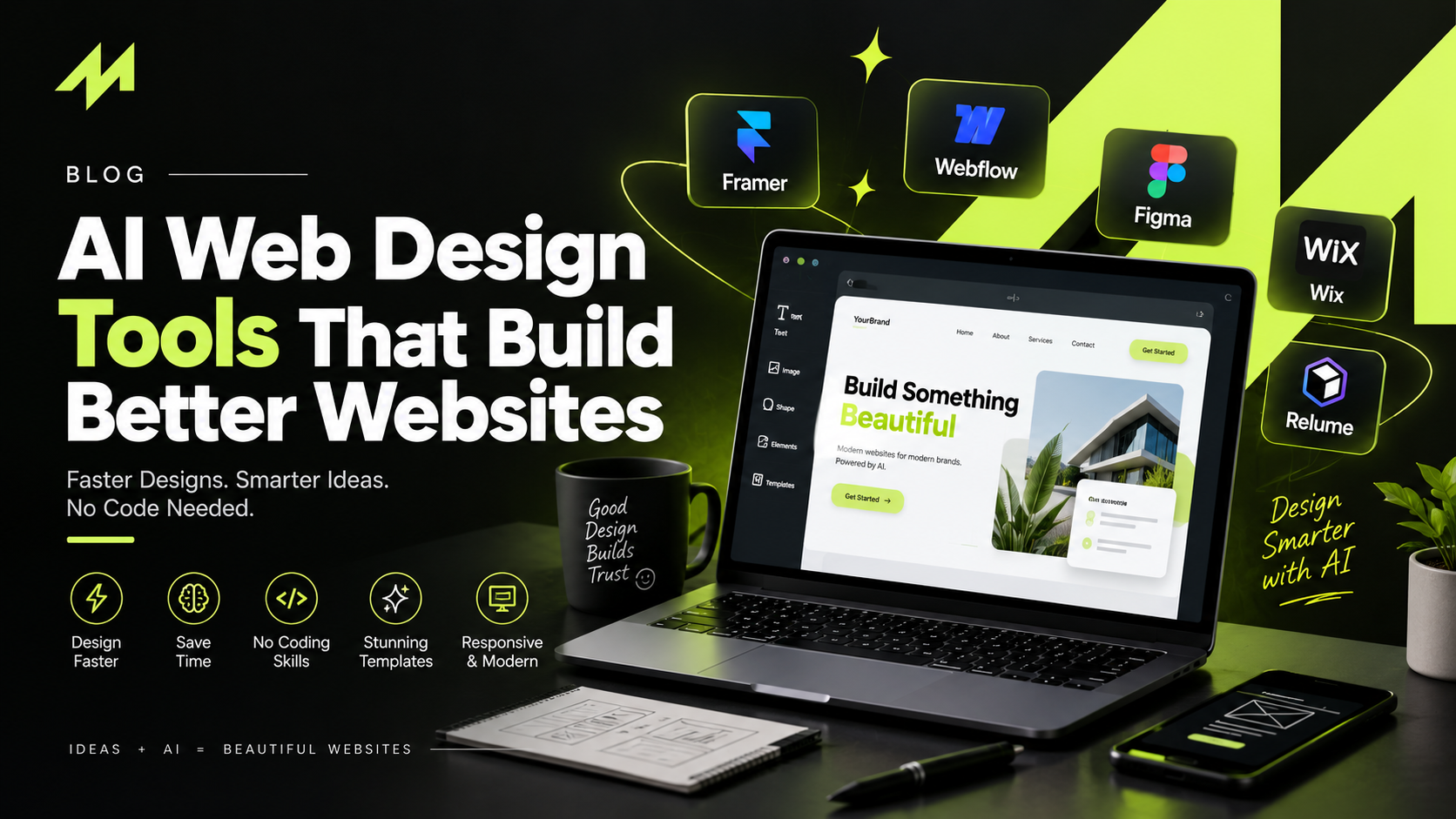
UX Pilot creates mobile and desktop screens from a prompt and exports to Figma, which helps when a developer takes over. Figma AI, including Figma Make, builds interactive prototypes inside files your team already uses. Google Stitch, which was released by Google Labs in 2025 uses Gemini models to turn text or images into frontend code and interface designs.
Students can use these tools to see how a layout comes together. Businesses can compare three directions before committing to one. Just don’t expect a finished product. Designers who have tried Figma’s AI often call the results generic and in need of rework.
AI Website Builder Platforms
An AI website builder takes you all the way to a live site. Relume AI generates a sitemap, wireframes and a style system that carry into Figma and Webflow. Framer AI produces responsive layouts, adds animation without code and hosts the published site.
Both suit marketing sites and landing pages far better than web applications. One review found Framer’s dashboard oddly spaced while its landing page held up fine. For a local business that needs five or six pages, that limit rarely matters.
Where an AI SEO Audit Fits
Design tools care about how a page looks. Search engines care about whether they can read it, and that gap is where an AI SEO tool earns its place. An AI SEO audit crawls the site and reports missing title tags, duplicate content, broken links, images without alt text and weak internal linking. Keep titles near 60 characters and meta descriptions between 150 and 160.
Speed deserves the closest look. Google’s Core Web Vitals ask for a Largest Contentful Paint within 2.5 seconds, an Interaction to Next Paint under 200 milliseconds and a Cumulative Layout Shift below 0.1. Generated sites often miss these through oversized images and extra scripts, so audit before launch and again a few weeks later.
One warning: audit tools count problems well but judge context badly. They may flag a deliberate design choice and miss a page aimed at the wrong search intent. Treat the report as a to-do list and confirm it in Google Search Console.
Where These Tools Fall Short
Brand personality goes first, since two businesses using similar prompts get strangely similar pages. Accessibility comes next, because contrast, keyboard navigation and clean HTML still need a human check. Then there’s the copy. Unedited AI text says very little, and thin copy seldom ranks. Also, keep client data and private plans out of your prompts.
How to Choose the Right Tool
Start with the output you need. Ideas call for a design generator, and a live site calls for an AI website builder. Check that you can export your work, because leaving a locked-in platform later is painful. Then test the free plan on one real page, and confirm pricing on the vendor’s site, since plans change often.
How We Approach It at Primexcale
As a digital marketing company in Jaipur working with D2C brands, we use these tools regularly, but the order of work matters more than the tool. We start with goals, audience and keyword research. Only then does AI draft a sitemap and wireframes. A designer and writer shape the result; we build with speed in mind, and we finish with an AI SEO audit plus a manual technical check.
A D2C marketing agency has one more job, which is making sure the site sells. Product page structure, load time and analytics tracking decide whether visitors become orders, and no generator sets those up on its own.
FAQs
Which are the best AI web design tools?
It depends on the project. UX Pilot and Google Stitch suit design exploration, Figma AI suits teams already in Figma, and Relume AI or Framer AI suit website projects. Try the free plan of one on a real page.
Can an AI website builder replace a web designer?
For a simple site, it gets you most of the way. It can’t make decisions about brand, conversion or technical SEO, and that’s where a designer or agency earns their fee.
How accurate is an AI SEO audit?
It’s dependable for technical issues at scale, like broken links, slow pages and missing tags. It’s weaker on search intent and content quality, so verify the priorities manually.
Final Thoughts
AI web design tools save real time, mostly at the start of a project. An AI website builder gets you online sooner, and an AI SEO tool catches what the design missed. Strategy, writing and technical basics are still yours to get right.
If you’re planning a new site or a redesign, the Primexcale team can review where your current site stands on SEO and performance and walk you through what we’d fix first.